


 August 19, 2026
Cosmetic rhinoplasty can be performed using two main techniques: the open rhinoplasty approach and the closed rhinoplasty approach. Both methods, when performed by a skilled surgeon, can produce highly satisfactory results. However, they differ in surgical technique, level of access, recovery time, and clinical indications.
Depending on the nasal type, such as thick-skinned (bulbous) noses or bony noses, as well as the patient’s aesthetic preferences for natural, semi-fancy, or doll-like results, one technique may be more appropriate than the other. In some cases, male patients may seek masculine rhinoplasty to maintain harmony with their facial structure.
Open Rhinoplasty
In open rhinoplasty, the surgeon makes a small incision on the columella, the narrow tissue between the nostrils, along with additional incisions inside the nostrils if needed.
The nasal skin is gently elevated, allowing the internal structures, including bone and cartilage, to be fully exposed. This direct visualization enables precise and extensive modifications during surgery.
Key Features and Steps of Open Rhinoplasty
- Incisions: One external incision on the columella plus internal incisions.
- Access: Full and direct visualization of the nasal bones, cartilages, and septum.
- Indications: Suitable for severe deformities, markedly deviated noses, revision rhinoplasty, and cases requiring major structural changes and reconstruction.
- Surgical precision: Wider exposure allows more accurate symmetry and complex corrections.
- Recovery: Initial swelling and bruising are usually greater, and complete resolution of edema may take longer. Final results typically become fully apparent within 12–18 months.
- Scar: The columellar scar is very fine and usually becomes nearly imperceptible after a few months.
Closed Rhinoplasty
In closed rhinoplasty, all incisions are made inside the nostrils, and there is no external skin incision.
The nasal skin is elevated internally as much as needed, and the surgeon performs the required modifications using specialized instruments. This method is commonly used for natural-looking rhinoplasty or cases requiring limited changes.
Key Features and Steps of Closed Rhinoplasty
- Incisions: Completely inside the nostrils with no external scar.
- Access: More limited visualization; modifications are performed through internal pathways.
- Indications: Suitable for less complex changes such as minor tip refinement, mild dorsal hump correction, narrowing of the nasal bridge, or reduction of nostril width.
- Aesthetic advantage: No visible external scar.
- Recovery: Less swelling and bruising compared with the open technique and a shorter recovery period.
- Limitations: Not suitable for highly complex corrections or revision rhinoplasty; precise symmetry may be more challenging in some cases.
- Recommendation: Often preferred for primary (first-time) rhinoplasty and simpler cases.
Open vs. Closed Rhinoplasty: Advantages and Disadvantages
Advantages of Open Rhinoplasty
- Full visualization and direct access to internal nasal structures.
- Suitable for difficult surgeries, severe deviations, and traumatic deformities.
- Greater precision in structural changes and symmetry.
- Preferred method for revision rhinoplasty.
Disadvantages of Open Rhinoplasty
- Slightly longer operative time.
- More initial swelling and bruising.
- Longer recovery period.
- Presence of a fine columellar scar, which usually fades over time.
Advantages of Closed Rhinoplasty
- No external incision or scar.
- Less swelling and bruising.
- Faster recovery.
- Shorter operative time.
Disadvantages of Closed Rhinoplasty
- Limited surgical visibility.
- More challenging for complex corrections.
- Not appropriate for revision or severely deformed noses.
How to Choose the Best Rhinoplasty Technique
Neither open rhinoplasty nor closed rhinoplasty is absolutely superior to the other. The appropriate choice depends on multiple factors, including:
- The type and extent of required changes.
- Nasal anatomy and structure.
- History of previous nasal surgery.
- The patient’s aesthetic and functional goals.
- The surgeon’s experience and preference.
Ultimately, the surgeon’s skill, experience, and artistic vision are among the most important determinants of rhinoplasty success. For one patient, the open technique may be ideal, while for another, the closed approach may be preferable, even when the required changes are similar.
Therefore, rather than focusing solely on technical differences, patients should prioritize selecting a highly skilled surgeon and undergoing a thorough consultation to achieve a result tailored to their face and individual needs.
Nasal Anatomy and Its Role in Rhinoplasty
Why Nasal Anatomy Is Important in Rhinoplasty
Rhinoplasty is one of the most complex and delicate aesthetic and functional facial procedures. Its success depends not only on the surgeon’s technical skill but also on a deep understanding of nasal anatomy, which includes bone, cartilage, skin, soft tissue, blood vessels, and nerves.
These structures affect both the appearance of the nose and its breathing function. An experienced surgeon evaluates them carefully to ensure that rhinoplasty enhances nasal aesthetics while preserving or improving respiratory function.
Structural Components of Nasal Anatomy
1. Bony Framework
The upper one-third of the nose is composed of bone, primarily the nasal bones and part of the frontal bone. This region forms the nasal bridge and has a major impact on overall facial appearance. Dorsal humps or bony prominences are commonly corrected in this area during rhinoplasty surgery.
2. Nasal Cartilages
The lower two-thirds of the nose consist primarily of cartilage, including:
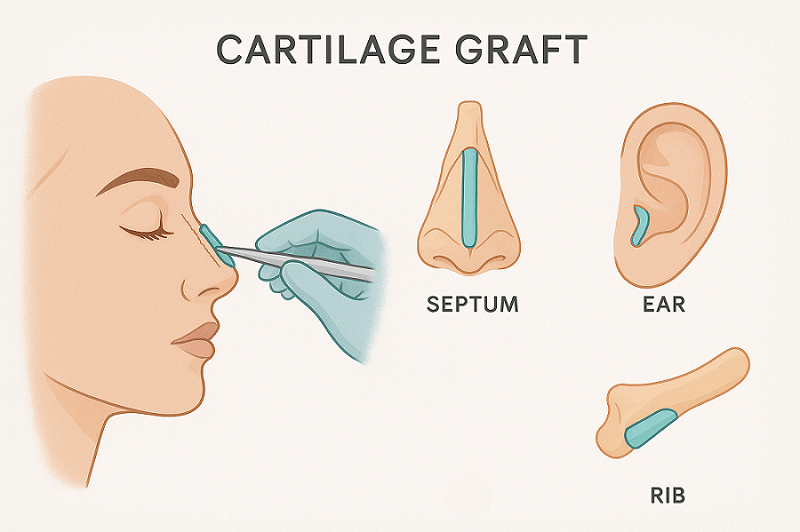
- Upper lateral cartilages: Located in the mid-nose and provide important structural support.
- Lower lateral cartilages: Determine the shape of the nasal tip and the width and contour of the nostrils.
- Nasal septum: The central supporting structure that plays a key role in symmetry, balance, and proper airflow.
3. Skin and Soft Tissue
Nasal skin thickness varies across different parts of the nose and between individuals and has a direct impact on the final surgical result. Thin skin may reveal minor structural irregularities, while thick skin can mask fine definition and make tip refinement more challenging.
The Role of Nasal Anatomy in Surgical Decision-Making
A skilled surgeon considers several anatomical and functional factors before performing rhinoplasty, including:
- Selection of the surgical technique, such as open or closed rhinoplasty, based on nasal form and patient goals.
- Extent and location of cartilage reduction or augmentation.
- Correction of septal deviation to improve breathing.
- Preservation or reinforcement of structural support to prevent tip collapse.
- Adjustment of nasal angles and proportions in harmony with other facial features.
- Simultaneous correction of functional problems such as nasal obstruction or internal valve narrowing.
Importance of Anatomical Knowledge in Preventing Complications
Insufficient understanding of nasal anatomy can contribute to postoperative problems such as:
- Breathing difficulties and nasal obstruction.
- Tip drooping or deformity.
- Asymmetry or unnatural shape.
- Need for revision rhinoplasty.
For this reason, selecting an experienced surgeon with comprehensive knowledge of nasal anatomy is essential for achieving safe and satisfactory results.
Aesthetic and Functional Considerations in Rhinoplasty
Rhinoplasty should not be performed based solely on appearance. The most successful outcomes occur when aesthetics and function are addressed simultaneously.
- The nasal tip should be harmonious with the bridge and upper lip.
- Symmetry and proportion with the forehead, cheeks, and chin are essential.
- Respiratory function through the septum and nasal valves should not be sacrificed for cosmetic goals.
Limitations of Rhinoplasty
Although rhinoplasty can create significant improvements in nasal appearance and function, it has certain limitations that should be understood in order to maintain realistic expectations.
Impact of Skin Quality and Thickness
Skin quality is an important factor in the outcome of rhinoplasty and cannot be fundamentally changed through surgery.
- Thick skin: In bulbous noses, structural details may be less visible and tip definition can be more difficult to achieve.
- Thin skin: Even minor irregularities in cartilage or bone may become visible.
Structural and Anatomical Limitations
- Severe deviations and prior trauma: Complete correction of major bony deformities or post-traumatic changes is not always possible.
- Nasofrontal angle: Deep alterations in this angle are limited.
- Alar base position: The location of the nostril base cannot be moved; only size and symmetry can be improved.
- Support structures: Excessive removal of cartilage or bone can compromise structural support and cause deformity.
Limitations Related to Nasal Size and Shape
- Bulbous noses cannot be reduced excessively without compromising a natural appearance.
- Over-reduction may lead to functional problems and dissatisfaction.
- Perfect facial symmetry is unrealistic because the human face is inherently asymmetrical.
Functional and Breathing Limitations
- Rhinoplasty can improve some problems such as septal deviation, but not all breathing problems.
- Temporary tip numbness is possible, and rarely there may be a reduced sense of smell.
Limitations of Revision Rhinoplasty
Revision rhinoplasty is generally more challenging because of scar tissue and altered anatomy. As a result, the extent of correction may be more limited.
External scars in open revision cases may occasionally require additional refinement.
Healing Process and Final Rhinoplasty Results
Nasal healing is unpredictable and may involve swelling, bruising, and structural changes over time. The final nasal shape usually stabilizes over several months to one year, requiring patience during the healing process.
Limitations of Non-Surgical Thread Rhinoplasty
Thread-based rhinoplasty may cause complications such as infection, thread extrusion, and unsatisfactory aesthetic results, potentially requiring revision surgery.
Realistic Expectations and Final Considerations
Facial Asymmetry and Rhinoplasty Results
Rhinoplasty cannot eliminate all facial asymmetries. The goal is to create balanced and harmonious proportions rather than perfect symmetry.
Understanding the Limitations of Rhinoplasty
Results depend on the initial nasal structure and overall facial anatomy. Patients should maintain realistic expectations and understand that surgical outcomes are influenced by individual anatomical limitations.
The Importance of a Realistic Rhinoplasty Consultation
During a consultation, the surgeon should clearly explain the limitations of the procedure and help align patient expectations with achievable outcomes.
Summary and Recommendations for Rhinoplasty
Rhinoplasty is more than a simple cosmetic procedure. It is a combination of art, science, surgical technique, and a detailed understanding of nasal anatomy.
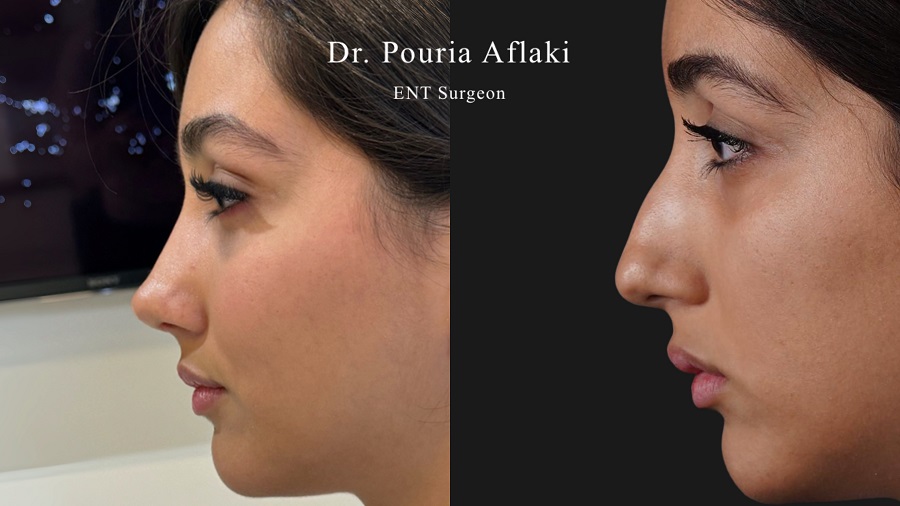
A skilled surgeon can achieve results that are aesthetically natural and harmonious with the face while preserving or improving nasal breathing function.
Important Pre- and Post-Operative Recommendations
- Choose a skilled surgeon: Experience is an important factor in achieving successful results for both thick-skinned and bony noses.
-
Select the appropriate surgical approach:
- Open rhinoplasty for complex corrections, severe deviations, and revision cases.
- Closed rhinoplasty for minor changes and less complicated cases.
- Maintain realistic expectations: Understand the limitations related to skin, nasal structure, facial anatomy, and the healing process.
- Follow postoperative instructions carefully: Proper sleeping position and nasal care can support breathing and healing.
- Understand different aesthetic styles: Depending on facial structure and individual preference, options may include natural, semi-fancy, or doll-like rhinoplasty.
By prioritizing surgical expertise, realistic expectations, and proper consultation, patients can work toward achieving a balanced, natural, and functional nasal result.

 No 32, Vallinezhad St., Vanak Square, Tehran, Tehran Province, Iran